Feeling at Home with Propane
It can take months to feel comfortable in a new home. We're here to help the system behind the comfort — your propane heating system — feel familiar, safe, and reliable.

Family owned and operated since 1993
Dear Neighbor,
Welcome to your new home.
If this is your first experience heating with propane, you may be wondering how much you need to know. How often will the tank need to be filled? What does the gauge mean? Who do you call if something seems off?
Those are all normal questions.
At Dileo Gas, we work with homeowners every day who are settling into propane-heated homes, sometimes for the first time. We know the system can feel unfamiliar at first. But once someone takes a little time to explain it, propane becomes much easier to understand.
Dileo Gas has been family-owned and operated since 1993. Our company was built around a simple promise: never leave families in the cold.
That promise means showing up reliably and taking safety seriously. It means being available in an emergency—always. And it means helping homeowners understand their options before anything becomes urgent.
To that end, we've created this online resource to help you get more comfortable with your propane system. Nothing overly technical or complicated. Just useful things homeowners often wish they'd known sooner.
For now, the main thing is this:
You don't need to know everything today. You only need to know that you have people you can call when you have a question.
"Warmth should be one less thing to wonder about."
Congratulations on your new home—and welcome!
Warmly,
(508) 645-8930

Homeowner's Knowledge Base
Useful things homeowners often wish they had known sooner. Click a topic to learn more.
Reading the Tank Gauge
One of the simplest things you can learn is where the tank gauge is. It usually reads as a percentage, not gallons.
Automatic vs. On-Demand
Automatic: We monitor usage and schedule deliveries for you.
On-Demand: You keep an eye on the gauge and call before the tank reaches 20%.
Safety Basics
Know what propane smells like before you ever need to. Many describe the smell as similar to rotten eggs.
Cold-Weather Confidence
When temperatures drop, you'll see the tank level moving faster. This is normal. Cold weather simply asks more of the system.
Propane Beyond Heat
Propane often does more than heat. It may support hot water, cooking, fireplaces, generators, or even pool heaters.
Storm Readiness
Storm readiness is not only about fuel. It is about access, safety, clear information, and knowing who to call.
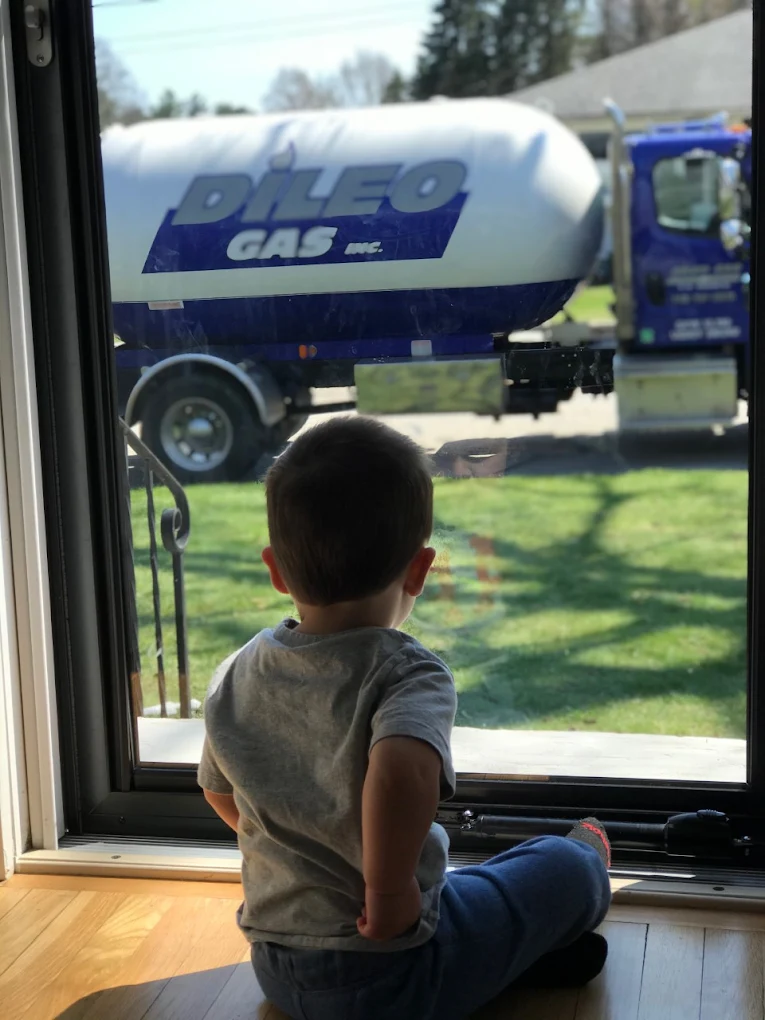
Understanding Your Home's Propane Rhythm
After you have lived with a new home for a little while, you usually begin to understand it differently. You learn which rooms stay comfortable, and which ones take a little longer.
DiLeo Gas was built as a family business, and the promise behind it has always been simple: never leave families in the cold. To us, that means more than delivering propane. It means answering the phone and helping people understand their options.
System Checks
Helping you review your tank, delivery plan, and usage.
Tank Planning
Guidance on tank size, placement, and underground options.
The New Homeowner's Propane Checklist
A simple, one-page guide to help you know exactly what to check and when during your first year. No guesswork, just peace of mind.
- Seasonal system checks
- Emergency shutoff locations
- Delivery scheduling tips
Download the Checklist
Tell us where to send your free PDF guide.
Get to Know Your Tank
Your propane tank isn't a mystery. Here's a simple visual guide to the parts that matter most.
Click any highlighted point to learn about that component
Explore Your Propane Tank
Your propane tank has several key components. Click on any highlighted point on the diagram to learn what it does and why it matters.
Try the Gauge Yourself
The gauge reads as a percentage, not gallons. See what different levels mean and when to call.
Tank Gauge Simulator
Drag the slider to see what different fill levels look like and what action you should take at each stage.
Your tank is well-supplied. You have plenty of propane for normal household use. This is an ideal level — tanks are typically filled to 80% to leave room for propane to expand safely as temperatures change.
Tank Placement & Setback Requirements
Where can your propane tank safely sit? Explore clearance requirements for 50 gallon, 120 gallon, and 2x120 gallon vertical residential tanks.
50 Gallon, 120 Gallon & 2x120 Gallon Tank Setbacks
Proper placement of your propane tank protects your home and ensures safety compliance. Click on any hotspot or rule below to explore clearance requirements for vertical residential tanks.
Electrical Meters & Outlets
Must be at least 10 feet away from any electrical meter, switch, or outdoor receptacle.
Electrical equipment produces minor sparks or arcs during normal operation. A 10-foot separation ensures gas vapors cannot reach potential ignition sources.
- Electric meter main panel
- Outdoor outlets & switches
- Electric heat pumps
All Setback Rules Summary
Quick reference guide for 50 gallon, 120 gallon, and 2x120 gallon vertical propane tank installations.
Electrical Meters & Outlets
Must be at least 10 feet away from any electrical meter, switch, or outdoor receptacle.
AC Units, Generators & Lights
Must be at least 10 feet away from window AC units, generators, condensers, or outdoor lighting.
Exhaust & Appliance Vents
Must be at least 10 feet away from any house exhaust vent, flue pipe, or intake.
Upper Windows
Must be at least 3 feet from any window located higher than the relief valve of the tank.
Doors, Lower Windows & Crawl Spaces
Must be at least 5 feet from doors, ground-level windows, or crawl space openings.
Property Line
Must be at least 1 foot from neighboring property lines.
Delivery Hose Reach
Tank must be set within 100 feet from the point where the delivery truck parks.
Driveway Protection
If placed within 10 feet of a driveway or vehicle area, crash protection (bollards/barriers) is required.
Site Setback Self-Check
0 of 6 ConfirmedCheck off items you've verified around your proposed tank area:
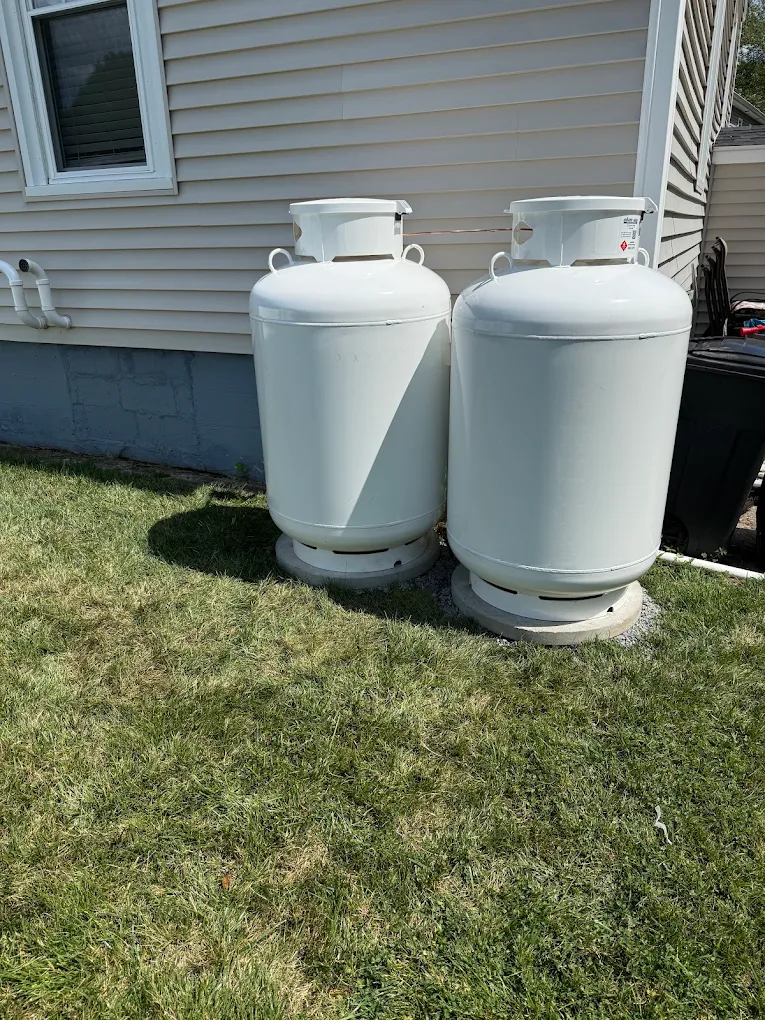
Underground Tank Requirements
Considering a buried tank? Explore location restrictions, house-mounted regulator rules, and excavation guidelines for 500 and 1000 gallon underground propane tanks.
500 & 1000 Gallon Underground Tank Requirements
Buried tanks have their own location, regulator, and excavation rules. Click any hotspot or requirement below to explore what's needed for a safe, code-compliant underground propane installation.
Distance From House
The underground tank must sit at least 10 feet from the house.
A 10-foot separation from the structure keeps the buried tank a safe distance from the home's foundation, ignition sources, and living areas.
- Outer wall of the home
- Attached garage or foundation
All Underground Requirements
Quick reference for 500 and 1000 gallon underground propane tank installations.
Distance From House
The underground tank must sit at least 10 feet from the house.
Distance From Generators & Appliances
At least 10 feet from any generator or other appliance.
Distance From Property Line
At least 10 feet from the property line.
Driveway & Crash Protection
If within 10 feet of a driveway, crash protection is required.
Delivery Vehicle Reach
The tank must be set within 100 feet of the delivery vehicle's point.
Regulator to Windows & Doors
The house-mounted regulator must be 3 feet from any window or door.
Regulator to Vents, Electrical & Basement Windows
The regulator must be 5 feet from any vent, anything electrical, or any basement window.
Excavation & Hole Dimensions
Hole size, depth, and sand base depend on the tank type. See the dimension table for 500 and 1000 gallon tanks.
Gas Line Trench
Gas line trench: at least 1'6" wide × 2' deep, base filled with 6" of sand, net depth 18".
Backfill, Sand & Crane Access
Backfill the entire tank hole and trench with sand after inspections. Sand must be on site for inspections, and our crane truck must drive within 5 feet of the hole.
Underground Site Self-Check
0 of 8 ConfirmedCheck off the items you can verify for your proposed underground tank location:
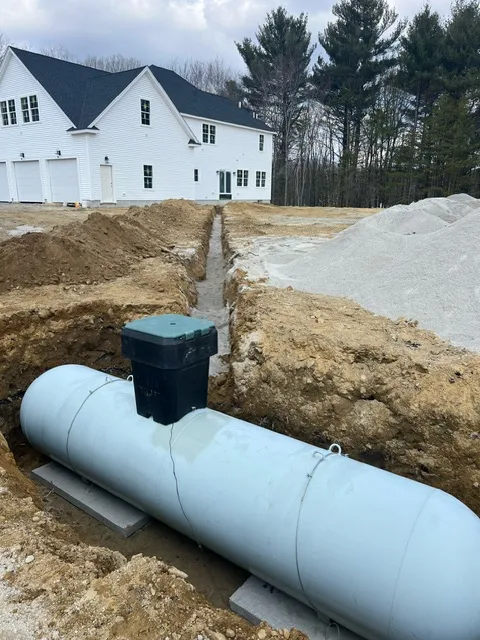
Propane Safety Videos
The Propane Education & Research Council (PERC) put together these short videos on propane tank safety, heater safety, and more. Give them a watch when you have a few minutes.
Propane Safety Basics
Propane Tank Safety
Propane Heater Safety
Propane Appliance Safety
What to Do If You Smell Gas
Propane System Maintenance
Frequently Asked Questions
Quick answers for new propane homeowners.
We're Happy to Talk it Through
If you have questions about your propane tank, delivery options, appliances, or safety basics, give us a call. No pressure. No rush. Just a useful conversation.
Call Anytime
(508) 645-8930
"Warmth should be one less thing to wonder about."